Back to Nominees

You can find out more about the donation-based crowdfunding campaign on the FEDORA Platform here.
€

Netherlands
Coops & Co
€0
collected
0
Number of donors
Pledge without a reward
You are about to make a donation to FEDORA, a French non-profit organisation, to support the crowdfunding campaign of the FEDORA Prizes Biennale 2025 on the FEDORA Platform. Donors can recommend a distribution of their donations to a specific nominated project, but FEDORA is in charge at its discretion to forward the funds to the Nominees.
Upon completing your donation, FEDORA or the Transnational Giving Europe Partner will provide you with more information regarding your donation receipt, allowing you to claim tax relief on your donation.
Please note that by donating online, you accept our Legal Notice (https://www.fedora-platform.com/more-infos/legal-notice).
Thank you for your generosity!
If you are a company or tax resident in Belgium, Bulgaria, Croatia, Germany, Greece, Hungary, Italy, Poland, Spain, Switzerland or United Kingdom and do not wish to receive the associated crowdfunding benefits, you can receive a tax receipt instead. To do so, please click on “Pledge without a reward” and type in the amount you wish to donate.
Please note that according to the Charities Aid Foundation, UK residents can only obtain a tax receipt for donations between GBP 100 and GBP 9,999.
Please note that according to the Swiss Philanthropy Foundation, Swiss residents can only obtain a tax receipt for donations of minimum 100 CHF. Donations as of €5 are still possible via FEDORA's payment page for anyone wishing to make a donation of under £100 or 100 CHF without receiving a tax receipt.
Learn more about possible benefits or tax deductions related to your donation here.
Learn more about the crowdfunding campaign here.

In The Ring © Thyrza Coenraad i
Richard Wagner's Der Ring des Nibelungen is one of the most ambitious and influential works in the history of opera. The cycle revolves around a magic ring that promises unlimited power but also carries a curse: Wagner shows that the pursuit of absolute power corrupts, a mechanism still recognisable in today's political and economic power structures. Across the twenty-six years in which he wrote the cycle his worldview shifted: in the first operas he believes in utopia, but by the fourth part that optimism has vanished. Utopia is doomed to fail, and the abuse of power is not incidental to humanity but intrinsic to it. In the Ring takes up that tension: how much conflict, difference and uncertainty are we willing to endure?
In the Ring translates this myth into the present. The audience is divided into three roles, each a position in today's society. The Gods are the state: formal power, yet dependent on the very technologies they try to regulate. The Dwarves are the tech developers: begun in optimism, swallowed by a relentless drive for growth. The Giants are the investors: capital that always wants its return. Later, players may leave their role to join The People, a collective of protest that undermines the others.
The company Rhinemaidens Ltd has tried to simulate an ideal society, but the system does not hold. The audience is asked to start again and build their own Walhalla. In act one they build it with earned Rhinegold (in our adaptation, the gold is the population's data). In act two manipulation begins; groups can steal gold from one another. In act three the role with the most power receives the Ring, and a choice: seize more, or share. In act four the people can rise up and destroy the Walhalla. The dome burns. The system restarts. Could we have reached a different outcome, or is destruction intrinsic to the system?
--
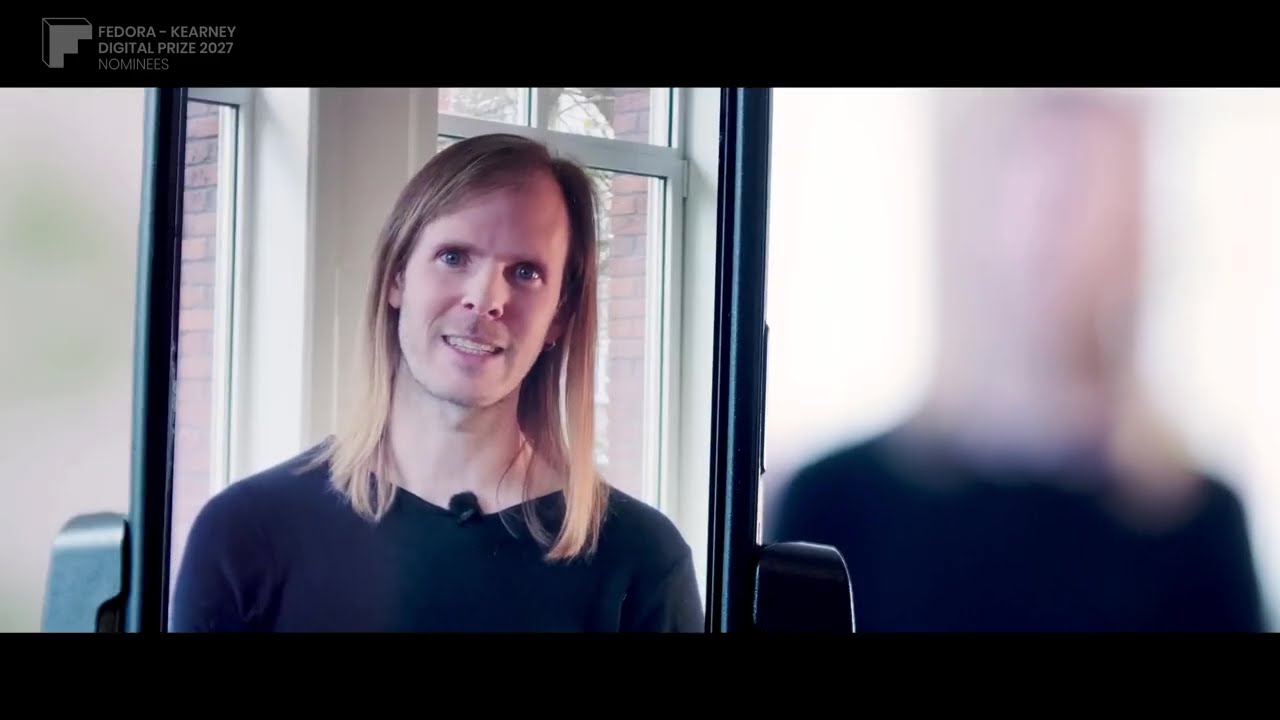

--
Pledge without a reward
You are about to make a donation to FEDORA, a French non-profit organisation, to support the crowdfunding campaign of the FEDORA Prizes Biennale 2025 on the FEDORA Platform. Donors can recommend a distribution of their donations to a specific nominated project, but FEDORA is in charge at its discretion to forward the funds to the Nominees.
Upon completing your donation, FEDORA or the Transnational Giving Europe Partner will provide you with more information regarding your donation receipt, allowing you to claim tax relief on your donation.
Please note that by donating online, you accept our Legal Notice (https://www.fedora-platform.com/more-infos/legal-notice).
Thank you for your generosity!
If you are a company or tax resident in Belgium, Bulgaria, Croatia, Germany, Greece, Hungary, Italy, Poland, Spain, Switzerland or United Kingdom and do not wish to receive the associated crowdfunding benefits, you can receive a tax receipt instead. To do so, please click on “Pledge without a reward” and type in the amount you wish to donate.
Please note that according to the Charities Aid Foundation, UK residents can only obtain a tax receipt for donations between GBP 100 and GBP 9,999.
Please note that according to the Swiss Philanthropy Foundation, Swiss residents can only obtain a tax receipt for donations of minimum 100 CHF. Donations as of €5 are still possible via FEDORA's payment page for anyone wishing to make a donation of under £100 or 100 CHF without receiving a tax receipt.
Learn more about possible benefits or tax deductions related to your donation here.
Learn more about the crowdfunding campaign here.

You can find out more about the donation-based crowdfunding campaign on the FEDORA Platform here.

Support sustainable innovation in opera and dance

Outdated browser
Please check your mailbox.
If you have an account on fedora-platform.com, you will receive an email with the steps to recover your account.
Please check your mailbox.
Please note that you can also use Facebook Login.
Sorry but this page has expired.
For security reasons, pages expire after 120 minutes of inactivity.
Please save everything you may need and refresh.
Please enter your card details and proceed to payment.


Thanks for your donation.
You will receive a confirmation email soon.
Best regards,
In The Ring's Team and the FEDORA Team
A problem occurred.
The payment was not able to be processed.
Please try again.